
Indian benchmark indices, Sensex and Nifty, saw declines in early trade due to escalating crude oil prices and ongoing US-Iran hostilities, which subdued investor risk appetite.

Indian benchmark indices Sensex and Nifty experienced a significant slump in early trade, mirroring a bearish trend in global equities, as escalating conflict in West Asia drove up crude oil prices and intensified investor concerns.

Tom Cruise lets go of the suave, sexy image and embraces the gloriously unsexy with supreme confidence, making this truly impossible mission utterly possible, raves Mayur Sanap.

Navigating this geopolitical minefield requires a cold-blooded blend of immediate tactical pleading, structural domestic diversification, and aggressive collective resistance, suggests Ambassador Rajasekhar.

India's electric two-wheeler market has seen record penetration, exceeding 11.2 per cent, driven by crude oil price fluctuations. This surge has led to an unexpected crisis for Indian OEMs, with unfulfilled customer demand reaching 20-30 per cent and average waiting periods exceeding four weeks, a situation expected to intensify during the upcoming festival season.

Iranian President Masoud Pezeshkian arrived in New Delhi for the BRICS summit, where he is scheduled to hold bilateral talks with Prime Minister Narendra Modi to enhance trade and strengthen overall relations. His visit is particularly significant given the heightened tensions in West Asia and recent US economic sanctions against Iran. Pezeshkian highlighted BRICS' role in fostering economic resilience and reducing dependence on the US dollar, while the summit itself aims to address global challenges and bolster collective resilience in critical sectors.

Indian benchmark indices, Sensex and Nifty, continued their downward trend for the fifth consecutive day, with the Sensex dropping 281 points and Nifty falling 78 points, primarily driven by surging crude oil prices and persistent geopolitical tensions in West Asia.

The flydubai near-tragedy showed how the gratuitous conflicts their governments started in West Asia have made the world unsafe for them (and unfortunate co-passengers of other nationalities), points out Kanika Datta.

The United Arab Emirates (UAE) has expressed intent to invest an additional $25 billion in India, with an ultimate goal of reaching $100 billion in investments, Union Minister Piyush Goyal announced. This comes as both nations plan to enhance cooperation in shipping, ports, energy, and emerging technologies, against a backdrop of expanding bilateral trade.

'Elevated crude prices and unchanged domestic fuel prices would put pressure on the profitability and cash flows of OMCs.'

Indian benchmark indices Sensex and Nifty surged in early trade, with the Sensex jumping nearly 700 points, primarily driven by strong buying in IT stocks following TCS's positive June-quarter results and optimistic demand outlook. Track Sensex, Nifty on July 10, 2026.

Foreign investors have aggressively sold off Indian equities, withdrawing over 48,213 crore in the first 10 days of April, following a record 1.17 lakh crore outflow in March, driven by escalating geopolitical tensions in West Asia, rising crude oil prices, and global inflation concerns.

India is hosting the BRICS summit, leveraging the platform to address global trade tensions and champion the developmental priorities of the Global South, including food, energy, and supply chain security. The summit, attended by leaders like President Xi Jinping and Vladimir Putin, will focus on resilience, innovation, cooperation, and sustainability, with India aiming to strengthen intra-BRICS collaboration and discuss global matters. The expanded BRICS grouping represents a significant portion of the world's population and GDP, making its discussions crucial for global economic stability.

Pakistan's government is exploring measures, including potential smart lockdowns and austerity, to reduce petroleum consumption. This comes after recent fuel price hikes driven by rising global oil prices and West Asia tensions, which have also raised concerns about oil supply disruptions. The government is also implementing a fuel relief scheme and faces public pressure over the price increases.

Russian President Vladimir Putin has arrived in India for a three-day visit to attend the BRICS summit and hold bilateral talks with Prime Minister Narendra Modi, focusing on expanding trade, investment, and energy cooperation amidst global geopolitical challenges.

The BRICS summit in New Delhi brings together leaders from major emerging economies to address global challenges like trade disputes, geopolitical upheavals, and the economic impact of conflicts in Ukraine and West Asia. India, as chair, aims to position BRICS as an economic growth engine, focusing on the Global South's food, energy, and supply chain security. The summit also highlights the grouping's expansion and its growing influence in global governance.

Union Finance Minister Nirmala Sitharaman has warned that the ongoing West Asia crisis is not merely a geopolitical issue but will directly lead to higher fuel costs for common people and businesses, impacting shipping, input availability, and export orders.

Despite occasional bursts of spunky comedy, the madness simply doesn't land as expected, and the overall vibe feels off with Vibe.

US President Donald Trump has lauded India as an 'essential partner' and 'trusted ally' in addressing regional challenges, particularly its 'big role' in West Asia peace efforts, following discussions with Prime Minister Narendra Modi at the G7 Summit.

Indian benchmark indices, Sensex and Nifty, extended their losses for a second consecutive day, primarily due to HDFC Bank's disappointing quarterly earnings and escalating tensions in West Asia, coupled with persistent foreign fund outflows.

The Strait of Hormuz crisis is impacting lifestyles worldwide, from reduced gold purchases in India to energy conservation in Europe and Japan, as governments urge citizens to adapt to the global energy shock.

'India is trying to project that it can engage with the world in a different way too.'

'India is vulnerable to the West Asia crisis in three ways: Energy costs, the business Indian companies conduct in the region, and remittances from the Indian diaspora.'

The BRICS grouping adopted a consensus joint declaration in New Delhi, successfully navigating differences on the West Asia conflict but notably omitting any direct mention of US strikes on Iran or Iranian military attacks on Gulf Arab nations. The declaration also criticised Israel's actions in Gaza and called for a concerted approach against terrorism.

The Asian Development Bank (ADB) has revised down India's GDP growth forecast for fiscal year 2026-27 (FY27) to 6.6 per cent from an earlier 6.9 per cent, primarily attributing the change to elevated energy prices stemming from the Middle East conflict. Despite this moderation, India is still expected to remain the world's fastest-growing major economy.

Prime Minister Narendra Modi cautioned against the 'weaponisation' of technology and critical minerals at the BRICS summit, advocating for cooperation to foster shared prosperity. Concurrently, Chinese President Xi Jinping announced plans for an open-source AI ecosystem for BRICS nations, positioning Beijing as a key technology partner amid global AI competition.
Indian benchmark indices Sensex and Nifty experienced a downturn in early trade, primarily influenced by a dip in HDFC Bank shares, persistent outflows from foreign funds, and escalating geopolitical tensions between the US and Iran. Track Sensex, Nifty performance.

A Goldman Sachs report indicates that US and Indian equity markets are becoming less attractive due to lower free cash flow (FCF) yields as valuations rise, while European markets offer significantly higher yields. Concurrently, India's top-listed residential real estate developers experienced a moderation in pre-sales in Q1FY27, attributed to delayed project approvals, limited launches, and high year-ago bases, though underlying housing demand remains healthy.

US President Donald Trump indicated that American military operations targeting Iran might not have concluded, while firmly rejecting immediate talks with Tehran. He asserted that Iran is facing severe military and economic difficulties and possesses limited capabilities, despite the reopening of the Strait of Hormuz.

Prime Minister Narendra Modi, addressing the BRICS summit, called for a fundamental shift in global governance, advocating for the replacement of the current 'pyramid of privilege' with a 'platform of partnership' where the Global South becomes a 'rule shaper' rather than a 'rule follower'.

Indian startup funding plummeted by 43 per cent year-on-year to $7.81 billion between March 1 and June 15, 2026, largely due to the West Asia conflict, which has amplified global risk perceptions, tightened liquidity, and led to rupee depreciation, making global investors cautious.

'PM Modi is trying to reduce the volume of fuel consumed instead of raising prices sharply.'

India's merchandise exports experienced a slight decrease in February, while imports surged due to increased gold and silver purchases, leading to a widened trade deficit. The West Asia crisis is expected to further impact trade in the coming months.

Indian Hotels Company (IHCL) reported a 20.8 per cent year-on-year rise in net profit for Q1 FY27, reaching 357.9 crore, despite macroeconomic headwinds like geopolitical tensions in West Asia impacting international travel and airline catering business.

Indian benchmark indices Sensex and Nifty rebounded in early trade on Thursday, recovering from a sharp fall in the previous session, driven by foreign fund inflows and buying in key blue-chip stocks. Track Sensex, Nifty on July 9, 2026.
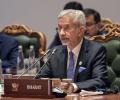
India has expressed serious concerns about the West Asia crisis and its potential impact on energy supplies and maritime stability, urging BRICS nations to find practical solutions to geopolitical challenges and unilateral sanctions.

The United States has extended a waiver from sanctions on Russian oil already at sea by one month, according to an official statement from the US Department of the Treasury.
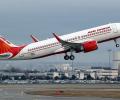
Air India Group has accumulated losses of about Rs 47,821 crore since its takeover, leaving its prolonged transformation among the biggest unfinished projects of N Chandrasekaran's tenure.

'Travellers are considering safer and more stable destinations.'
Indian investors have seen their wealth erode by a staggering Rs 16.77 lakh crore over four trading sessions, as the markets faced deep losses driven by elevated crude oil prices, geopolitical tensions, persistent foreign fund outflows, and a record-low rupee.
